
There's a word in Japanese that has no direct English translation. It describes something you've felt but probably never named — that quiet exhale when you step into a room and it just works. Not because of what's in it, but because of what isn't.
The word is Ma (間).
And it might be the single most important design concept that Western architecture has been getting wrong for centuries.
A Character Worth Reading Literally
Look at the kanji for Ma: 間. It combines the radical for "gate" (門) with the character for "sun" (日) nested inside. Light streaming through an opening. Not the gate itself, not the sunlight alone — but the charged space between them.
This isn't poetic abstraction. It's an architectural instruction manual hiding in plain sight.
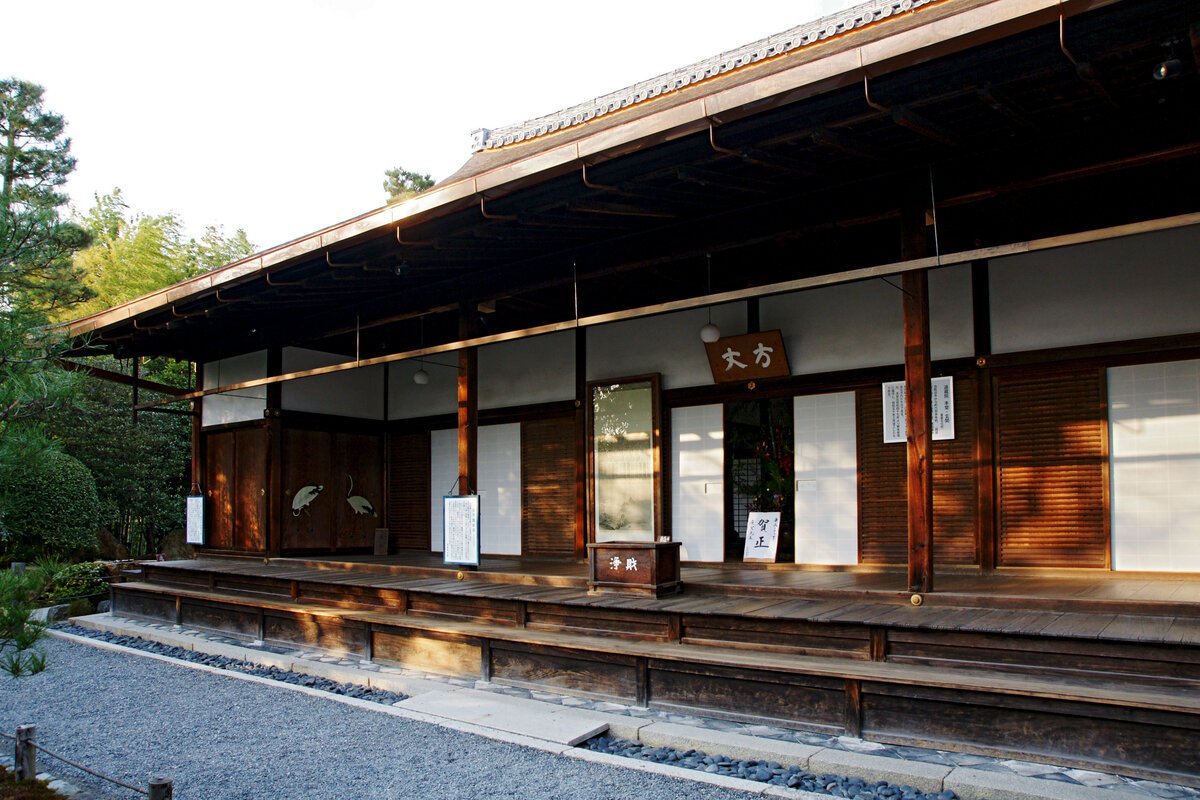
When 8th-century Japanese builders designed the earliest shinden-zukuri residences for Heian-period aristocrats, they didn't start by asking "what goes in this room?" They started by asking "what does this space need to feel like?" That distinction — between filling space and shaping emptiness — produced buildings that have influenced architects for over a thousand years.
But here's where it gets interesting for anyone designing or building a cabin: Ma isn't about luxury square footage. It's about making less space feel like more.
113 Square Meters That Changed Architecture
In 1989, Tadao Ando built the Church of the Light in Ibaraki, Osaka Prefecture. The entire chapel measures roughly 113 square meters — about the footprint of a modest cabin. Three concrete cubes, each 5.9 meters wide, stacked end to end. The reinforced concrete walls are 38 centimeters thick, poured with an engineering-quality mix dense enough to achieve a glass-like surface finish.
Then Ando did something that made this tiny building world-famous: he cut a cruciform void into the eastern wall. That's it. No stained glass. No ornamentation. Just a precise subtraction of material that allows morning light to pour through, dematerializing the concrete interior into something transcendent.
The building's power comes entirely from what Ando removed. The void is the architecture.
This is Ma in its purest structural form — and it scales down to cabin design more directly than most people realize.
The Measurable Science Behind "Feeling Spacious"
Ma isn't mysticism. It's supported by environmental psychology research on spatial perception. When humans enter a room, our brains don't calculate square footage — they calculate visual depth, sightline continuity, and light gradient complexity.
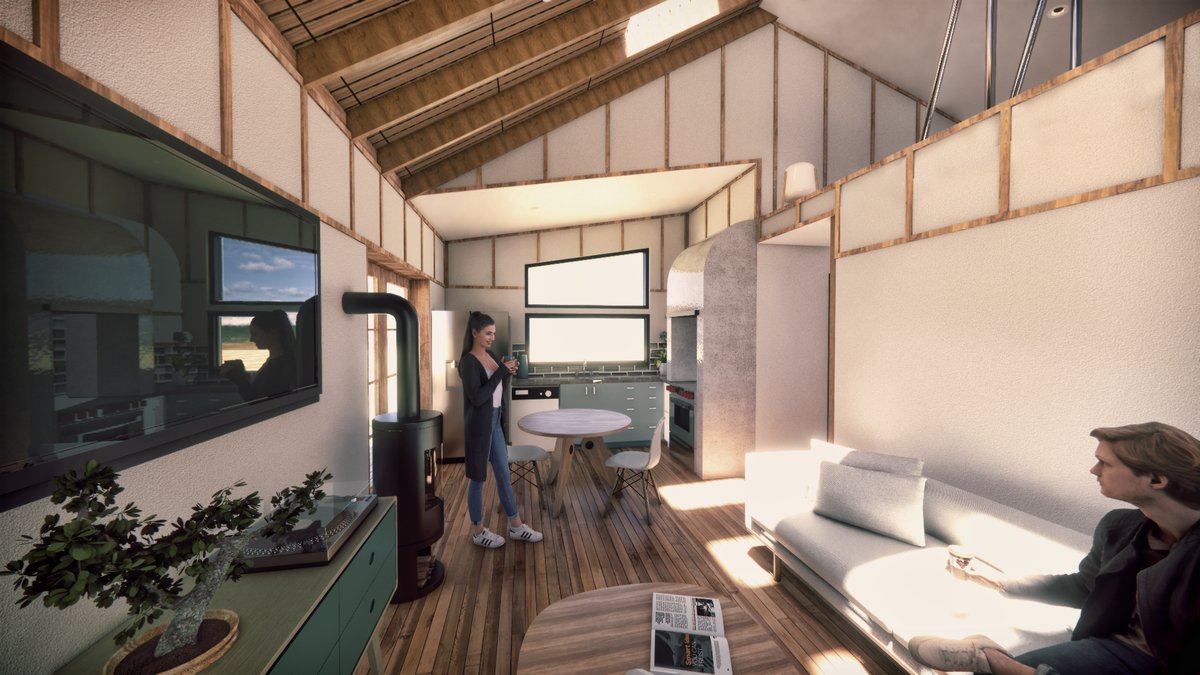
A 400-square-foot cabin with uninterrupted sightlines from the entry to a far window will feel significantly larger than a 600-square-foot cabin chopped into defined rooms. The traditional Japanese house exploits this through fusuma (sliding opaque panels) and shoji (translucent screens) that can reconfigure an entire floor plan in minutes. One room becomes three. Three rooms become one. The walls themselves are impermanent — a radical idea that Western framing has only recently started to reconsider.
Consider the tatami room: belongings stored behind built-in cabinetry, a single tokonoma alcove displaying one carefully chosen object surrounded by deliberate emptiness. The room doesn't feel "bare." It feels charged. Every object carries more visual weight because the space around it gives your eye permission to rest.
This is the paradox of Ma: emptiness creates presence.
What This Means for Your Cabin (Practically)
Strip away the philosophy for a moment and look at the engineering implications. Ma-informed cabin design produces measurable benefits:
Passive thermal performance. Open interior volumes allow air to circulate by convection without mechanical assistance. When you eliminate unnecessary partition walls, warm air moves freely to where it's needed. Japanese builders understood this centuries before HVAC engineers put equations to it — the engawa corridor (which we've written about previously) is essentially a Ma-driven thermal buffer zone.
Daylighting efficiency. Fewer walls mean fewer light-blocking surfaces. A cabin designed with Ma principles can reduce artificial lighting dependency by 30-40% during daylight hours simply through unobstructed fenestration paths. When light can travel the full depth of a structure without interruption, every square foot receives more natural illumination.
Structural economy. Less interior framing means less material. A cabin designed around open volumes with strategic structural points rather than continuous load-bearing partition walls can reduce framing lumber by 15-20%. That's not just a sustainability win — it's a direct cost reduction.
The Threshold Moment
There's a specific architectural experience that Ma-designed spaces create, and once you recognize it, you'll notice it everywhere — or notice its absence.
It's the threshold moment: that split second when you transition from one spatial condition to another. From compressed to expansive. From dark to light. From enclosed to open. Japanese architecture choreographs these transitions obsessively. The low entry ceiling that gives way to a soaring living volume. The narrow hallway that opens to a wall of glass. The covered porch that mediates between the security of interior and the wildness of landscape.
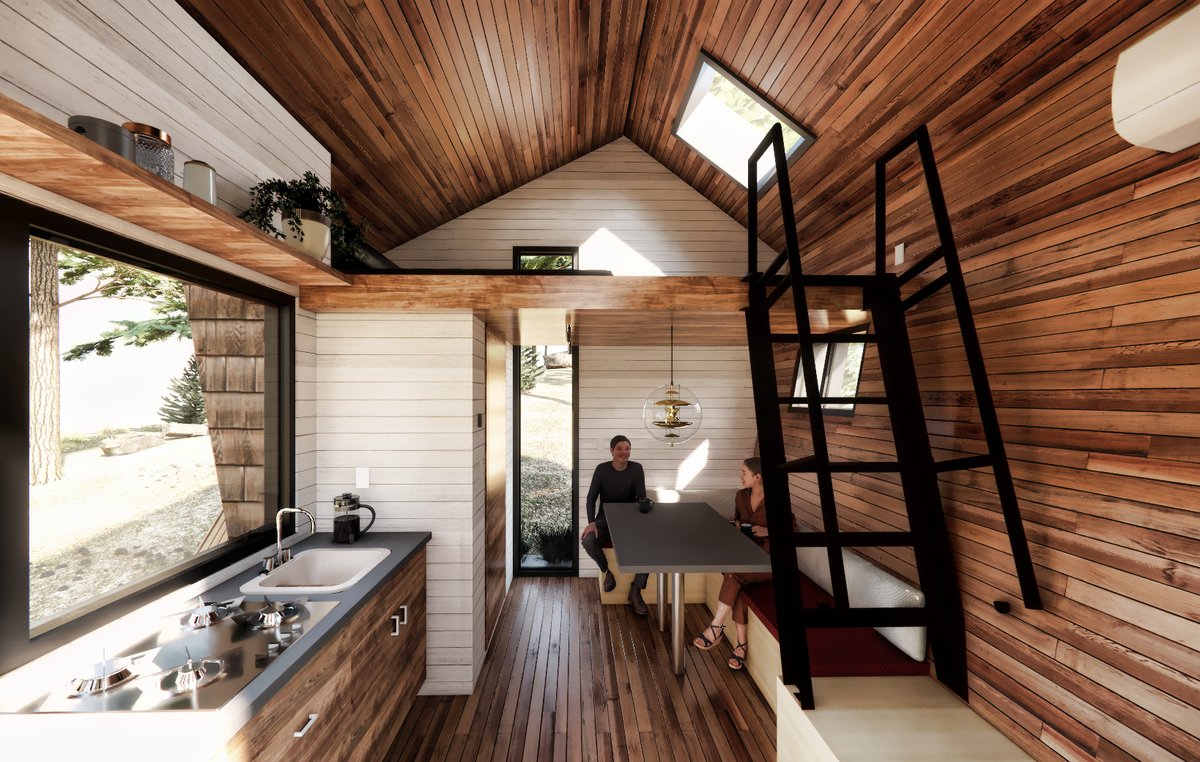
In the B.ende cabin design, this plays out through the passthrough from kitchen to exterior deck — the ceiling compresses, creating what architects call a "gateway condition," before releasing into the open air. You feel the space expand. That feeling isn't accidental. It's Ma, engineered into the section drawing.
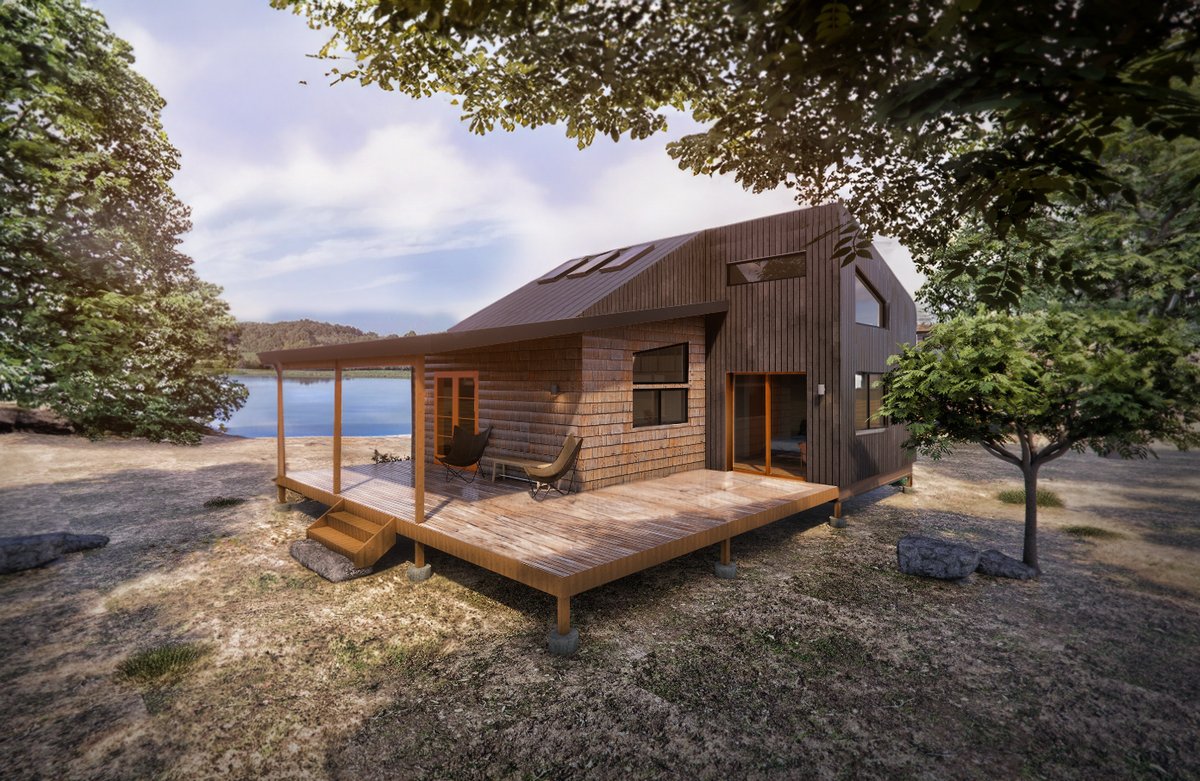
The Redshift cabin achieves something similar through its split-and-shift plan. By taking a simple rectangular form and displacing the two halves, intermediate spaces emerge between interior and exterior — transitionary zones that are neither fully inside nor fully outside. These in-between spaces are the Ma. They're where the building breathes.
Why This Matters More at 400 Square Feet Than 4,000
Here's the counterintuitive truth: Ma becomes more critical as square footage decreases, not less.
In a large home, spatial mistakes get absorbed by sheer volume. A poorly placed wall is inconvenient but survivable. In a cabin, every partition decision either amplifies or suffocates the entire experience. There is no margin for spatial waste.
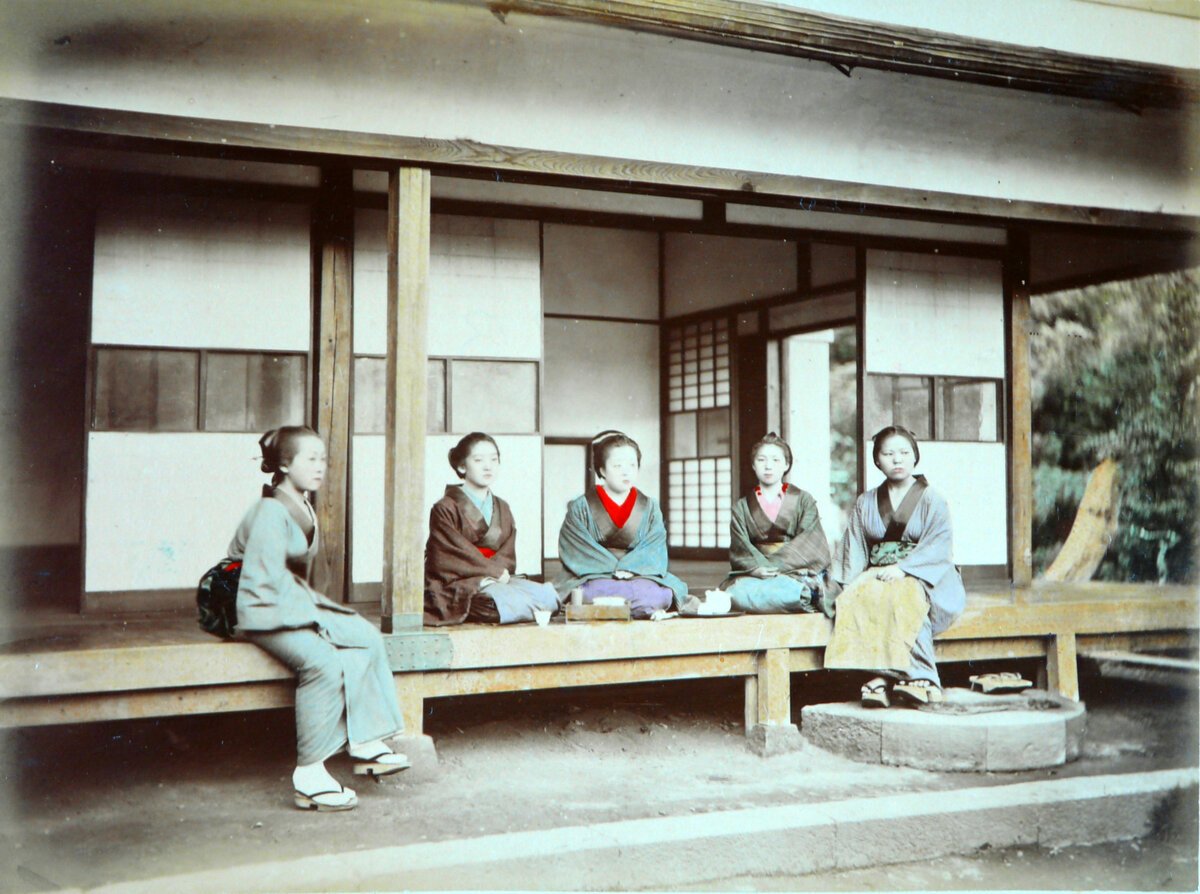
This is why the most successful small structures in architectural history — from the Japanese tea house (as small as 2 tatami mats, roughly 36 square feet) to contemporary micro-cabins — treat emptiness as their primary building material. The tea master Sen no Rikyū understood in the 16th century what neuroscience confirmed in the 21st: humans need visual rest as much as visual stimulation. A space that provides both, in rhythm, feels larger than its dimensions suggest.
But there's a catch — and it's the reason most cabin designs fail to achieve this effect, even when they're architecturally ambitious.
We'll get into that in the next post.
Every Yugen Cabins plan is designed with spatial intention at its core — threshold moments, sightline continuity, and the kind of deliberate emptiness that makes a compact footprint feel boundless. If you want to see Ma principles translated into buildable construction documents, start with the Redshift — a cabin whose split-and-shift plan creates exactly the kind of charged in-between spaces that make small structures extraordinary.
0 comments