
The Strip of Wood That Made a Thousand Years of HVAC Unnecessary
Somewhere around the 8th century, Japanese builders solved a problem that modern architects are still writing grants to study.
They didn't use phase-change materials, automated louvers, or computational fluid dynamics. They used a strip of wood — roughly two feet wide — running along the exterior of a house. They called it an engawa (縁側). And for the next twelve centuries, it quietly regulated temperature, controlled humidity, managed airflow, and transformed the boundary between indoors and outdoors into one of the most architecturally sophisticated climate systems ever devised.
Most people walk past it and think: nice porch.
They are spectacularly wrong.
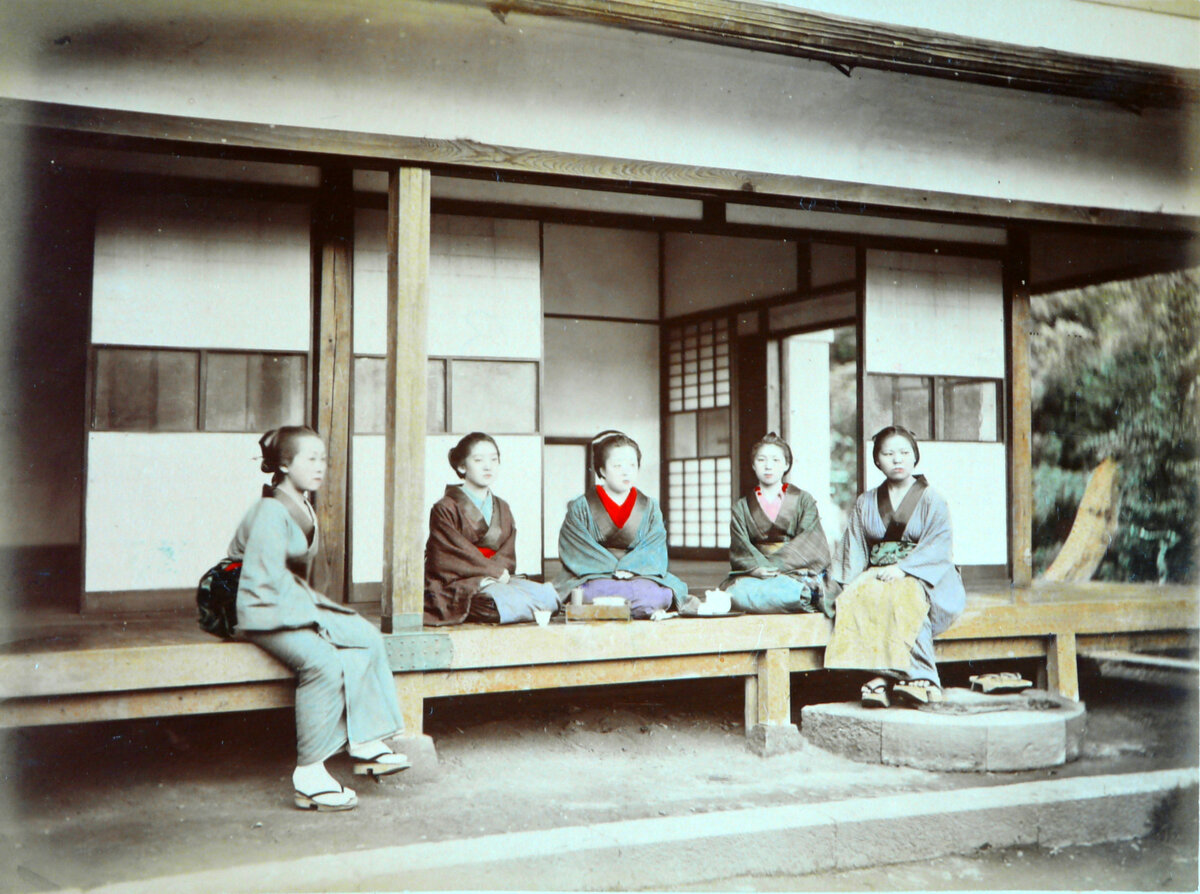
What the Engawa Actually Is
The word breaks down simply: en (縁) means border or edge; gawa (側) means side. Structurally, the engawa is a raised wooden platform — typically 60 to 75 centimeters above grade — that runs along the perimeter of a traditional Japanese building. It sits between the paper shoji screens of the interior and the outer rain shutters, called amado.
That position is everything.
The engawa is not the inside of the building. It is not the outside either. It occupies what architects now call a "threshold zone" — a liminal space that belongs to neither condition while performing the thermal work of both. This is the concept of ma (間): the Japanese idea that meaningful space exists in the interval between things, not in the things themselves.
It is also, as it turns out, a near-perfect passive climate buffer.
The Solar Geometry Hidden in the Eaves
Here is where the physics begins — and where traditional Japanese builders demonstrated an understanding of solar geometry that Western architects wouldn't formalize until the 20th century.
The sun follows a fundamentally different path across the sky in summer versus winter. In summer, it arcs high — sometimes reaching 70° above the horizon at solar noon in temperate latitudes. In winter, that same arc drops dramatically, often sitting only 20–30° above the horizon.
Traditional Japanese roofs are engineered around this fact.
The deep overhanging eave — noki (軒) — is angled and extended to block the high summer sun entirely, casting the engawa and the interior rooms behind it in complete shade during the hottest months. But in winter, when the sun travels low, that same eave geometry allows sunlight to penetrate beneath it, crossing the engawa floor and reaching deep into the interior rooms. The engawa's dark, polished wood floor absorbs that low-angle winter light and re-radiates it as gentle heat — a thermal mass working in tandem with a precise geometric calculation.
This is not folk wisdom. Research published by the Architectural Institute of Japan and referenced in passive design literature confirms that properly sized overhangs can reduce interior cooling loads by blocking solar gain during peak months, while the shading-to-glazing geometry determines whether the same overhang allows meaningful winter passive solar gain.
Japanese builders worked this out empirically over centuries and encoded it directly into the proportional system of their architecture. The result: a building that is significantly warmer in winter and cooler in summer without a single mechanical system.
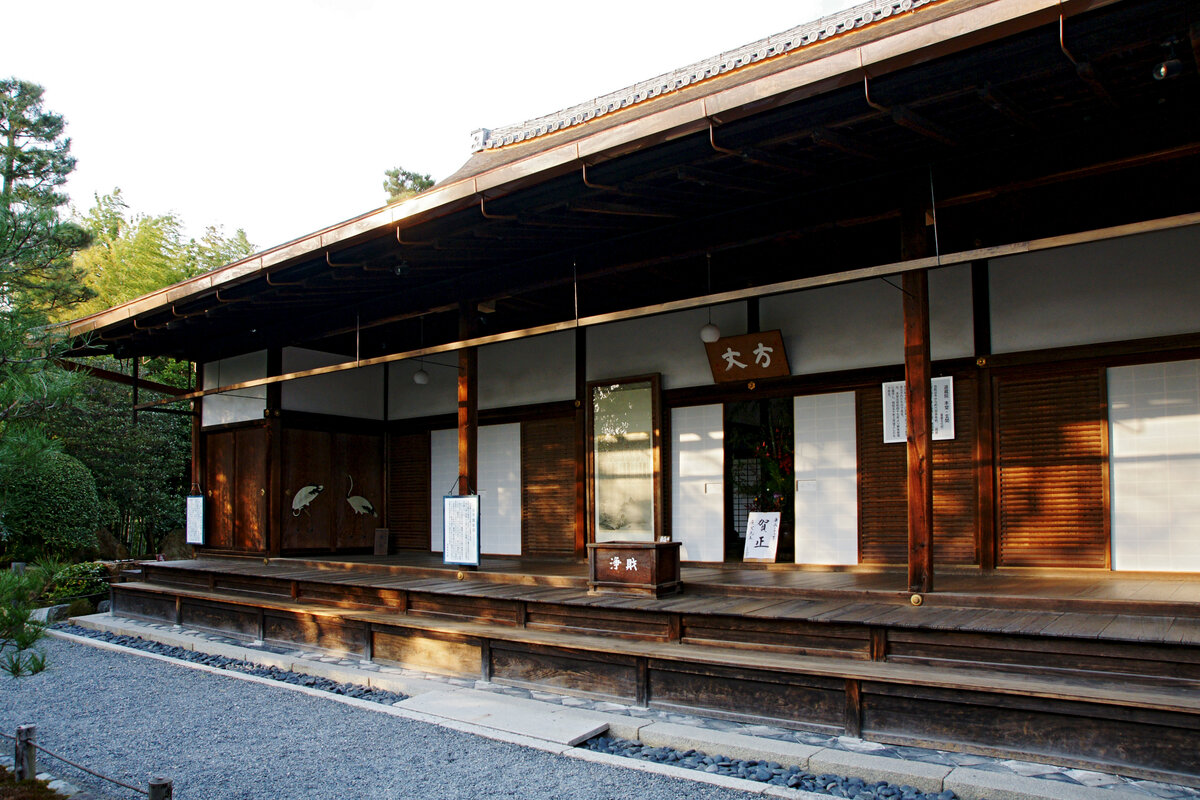
Rain Without Walls — Ventilation Without Compromise
The engawa does something else that most people never notice: it lets you leave the house open during rain.
In a conventional building, rain means closing windows. Closed windows mean stagnant air. Stagnant air means heat buildup, moisture accumulation, and reduced indoor air quality. In humid climates — and Japan is extraordinarily humid — this is not a trivial problem.
The engawa solves it by acting as a rain screen. The delicate shoji screens that form the actual interior wall are set back from the outer edge of the engawa by the full width of the platform — often 600 to 900mm. Rain falls on the engawa floor. It does not reach the screens. The house stays open, air moves freely through the interior, and the humidity problem is managed without closing anything.
Meanwhile, removing the shoji entirely allows cross-ventilation to work at full efficiency — pulling hot air up and through the structure while drawing cooler air across the engawa surface from outside. Researchers studying passive cooling in traditional Japanese buildings have documented temperature differentials of 3–5°C between buildings utilizing these strategies and those without. In a climate where summer temperatures regularly exceed 35°C, that is the difference between comfort and crisis without mechanical cooling.
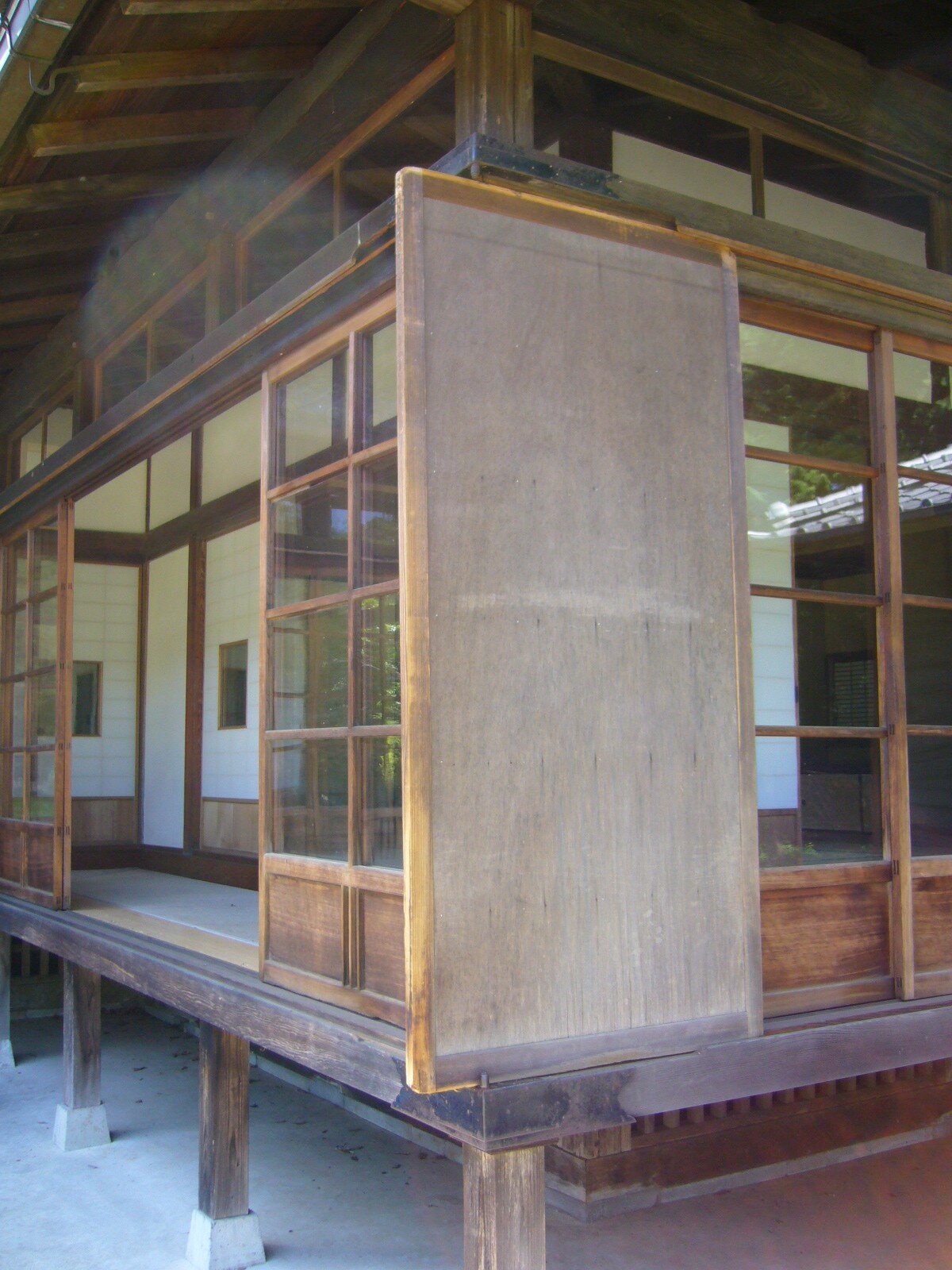
The Concept That Shares a Name With This Brand
There is a reason Yugen Cabins took its name from a Japanese aesthetic concept rather than a product category or a founder's surname.
Yūgen (幽玄) is untranslatable in the precise sense — but its closest approximation is a profound awareness of the universe that triggers a deep, wordless emotional response. It is the feeling that arises when you watch mist settle into a valley at dusk, or when late afternoon light falls across a wooden floor in a way that makes you stop. Not beauty exactly. Beauty plus awareness of impermanence. The shadow that makes the light worth noticing.
The engawa was designed to produce this feeling deliberately. It is a place where you sit at the intersection of inside and outside, watching the garden change with the seasons, feeling the warmth of winter sun on your face while remaining dry and sheltered. The Japanese built a climate system, and in the process, they built a philosophy of living. The two things cannot be separated. That is the point.
What This Means for Your Cabin Build
You do not need to build a traditional Japanese house to apply these principles. The most compelling applications are happening right now in contemporary small cabin and ADU design — where the budget constraints of a small footprint make passive strategies not just appealing, but financially essential.
Threshold zones earn their square footage. A 600mm covered transition between your glazed wall and the exterior is not wasted space. It is a climate buffer, a rain screen, a view frame, and an outdoor living area — doing more thermal work per square foot than almost any material upgrade you could make to your wall assembly.
Overhang geometry is a design decision, not a detail. The width of your eave should be calculated based on your latitude and the solar angles at which you want shading to begin and end. This must happen at the design stage, not during construction.
The interior-exterior boundary should be negotiable. Fixed walls forgo the ventilation and thermal benefits that a transitional zone provides. Folding or sliding glazed walls — paired with deep overhangs — recreate the core function of the engawa in a contemporary idiom.
One of the few modern cabin designs integrating all three principles at the 370 sq ft scale is the Yūgen Studio. Two sliding/folding glass walls create exactly the kind of threshold negotiability that makes passive strategies work. At this scale, every design decision echoes. The engawa lesson is that the right decision, made once, echoes for a thousand years.
But here is what most contemporary passive design guides don't tell you — and what Japanese builders understood from the beginning: the thermal performance of the engawa depends entirely on one relationship. The ratio of eave depth to window height. Get that ratio wrong by even a few inches, and the geometry stops working. The summer sun gets in. The winter sun doesn't. The buffer zone fails.
That ratio — and exactly how to calculate it for any latitude — is something we'll be going deep on in an upcoming post. The number will surprise you.
Ready to build something that works with your climate instead of against it? The Yūgen Studio plan was designed from the ground up around these passive principles — 370 sq ft of high-performance space with folding glass walls, a compact footprint, and the kind of thoughtful detailing that makes a small build feel large. Explore the full plan set →
0 comments