
Most builders pick a roof overhang depth based on aesthetics or whatever their framing crew is accustomed to. Twelve inches feels safe. Twenty-four inches looks dramatic. Somewhere in between feels "right." But there is a precise number — calculated to the inch — that determines whether your cabin heats itself for free in January or becomes an oven by July. And most people building cabins have never heard of it.
That number comes from a branch of building science called solar geometry, and it is one of the clearest examples of why the difference between an architect and a builder is not just about drawings. It is about performance.
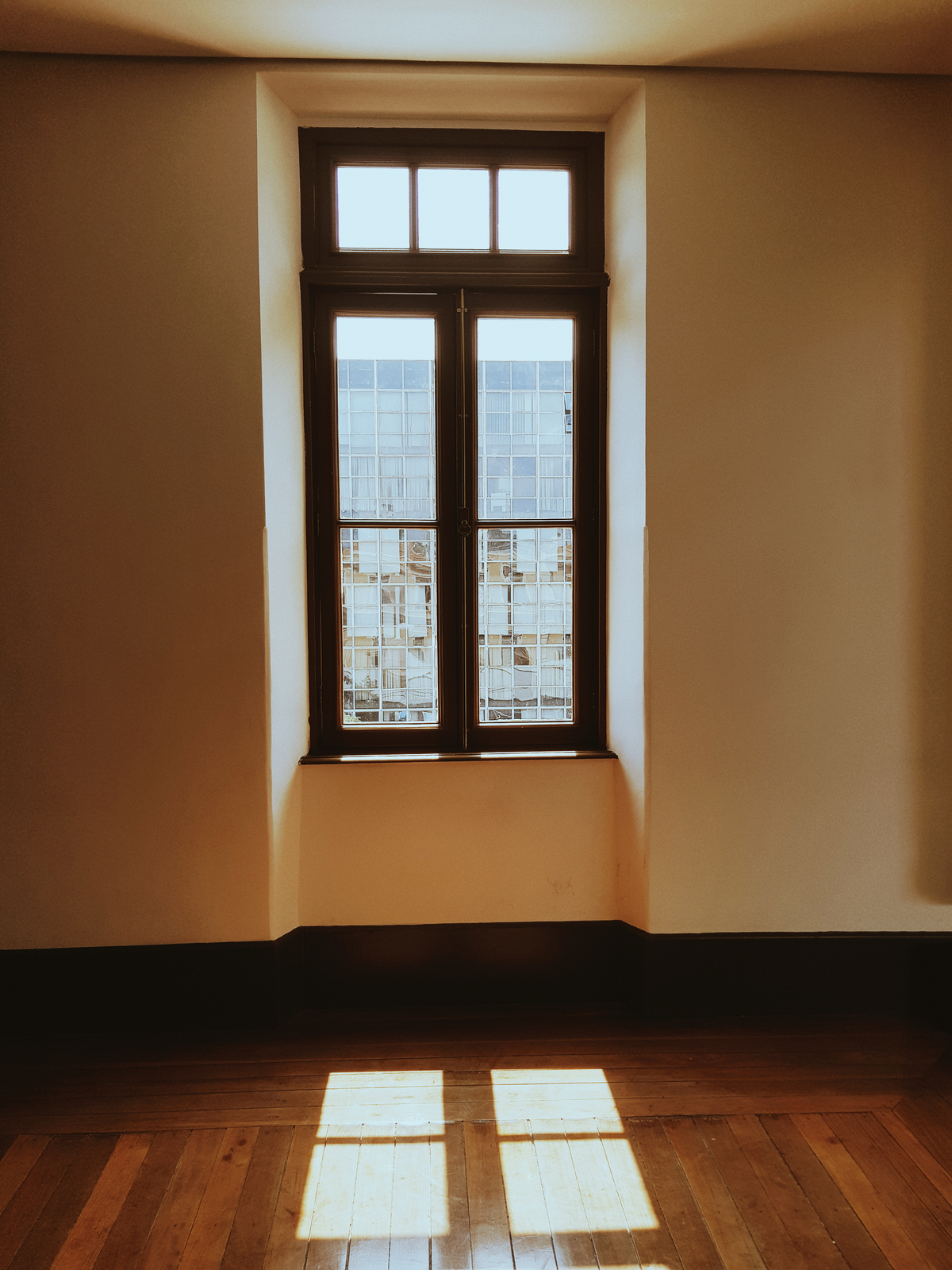
The Sun Does Not Take the Same Path Twice
Here is the fact that changes everything: the sun's angle above the horizon shifts by roughly 47 degrees between the summer solstice and the winter solstice. At a latitude of 36°N — roughly Asheville, North Carolina or Knoxville, Tennessee — the summer sun climbs to about 77° above the horizon at solar noon. In December, it barely reaches 30°.
That 47-degree swing is not a minor detail. It is the entire operating principle behind passive solar design. And the mechanism that exploits it is deceptively simple: the roof overhang.

How an Overhang Becomes a Thermostat
Picture a south-facing window on a cabin wall. In summer, the sun is nearly overhead. A properly sized overhang casts a shadow that covers the entire window, blocking direct solar radiation before it ever touches the glass. Your cooling load drops. Your interior stays comfortable without air conditioning.
Now fast-forward to December. The sun rides low across the southern sky. That same overhang, which blocked everything in July, now allows sunlight to stream directly through the glass and onto a thermal mass floor — a concrete slab, a stone hearth, a dark tile surface — which absorbs that heat and radiates it back into the room for hours after sunset.
No moving parts. No electricity. No maintenance. The same piece of architecture does two opposite jobs, six months apart, because someone calculated the correct depth.
The Calculation Most Builders Skip
The formula itself is straightforward. You need three inputs: your latitude, the height of the window, and the distance from the top of the window to the bottom edge of the overhang.
The solar altitude angle at noon on the summer solstice is:
Summer angle = 90° - (Latitude - 23.5°)
For the winter solstice:
Winter angle = 90° - (Latitude + 23.5°)
The overhang depth is then calculated using the tangent of these angles. The National Oceanic and Atmospheric Administration publishes latitude-specific "overhang factors" — multipliers you apply to the vertical distance between the window sill and the overhang's lowest edge. The result tells you, to the inch, how far that overhang should extend from the wall face.
At 36°N latitude, a window that is 4 feet tall with its top edge 6 inches below the overhang needs approximately 18 inches of horizontal projection to achieve full summer shading while permitting complete winter solar gain.
Change the latitude by even 5 degrees and the number shifts meaningfully. A cabin in northern Michigan requires a different overhang than one in the Tennessee Valley. A cabin in the Texas Hill Country requires something else entirely.
This is the kind of detail that separates an architect from a builder. A builder installs what looks proportional. An architect calculates what performs.
When 6 Inches Costs You Thousands
Get the overhang too shallow, and your south-facing glass becomes a liability in summer. You compensate with blinds, curtains, low-e coatings, or — most commonly — a larger HVAC system. Each of those solutions adds cost and complexity to solve a problem that the right overhang depth would have prevented for free.
Get it too deep, and you sacrifice the free heating that south-facing glass provides in winter. You make up the difference with a bigger furnace, more firewood, or higher electric bills. The U.S. Department of Energy estimates that properly designed passive solar features can reduce heating costs by 50% or more in well-insulated buildings. An overhang that is 6 inches too deep quietly erases much of that benefit.
The irony is that the material cost difference between an 18-inch overhang and a 24-inch overhang is negligible — a few extra inches of rafter tail, some additional fascia board. The performance difference over a 30-year mortgage is measured in thousands of dollars.
Orientation Matters More Than You Think
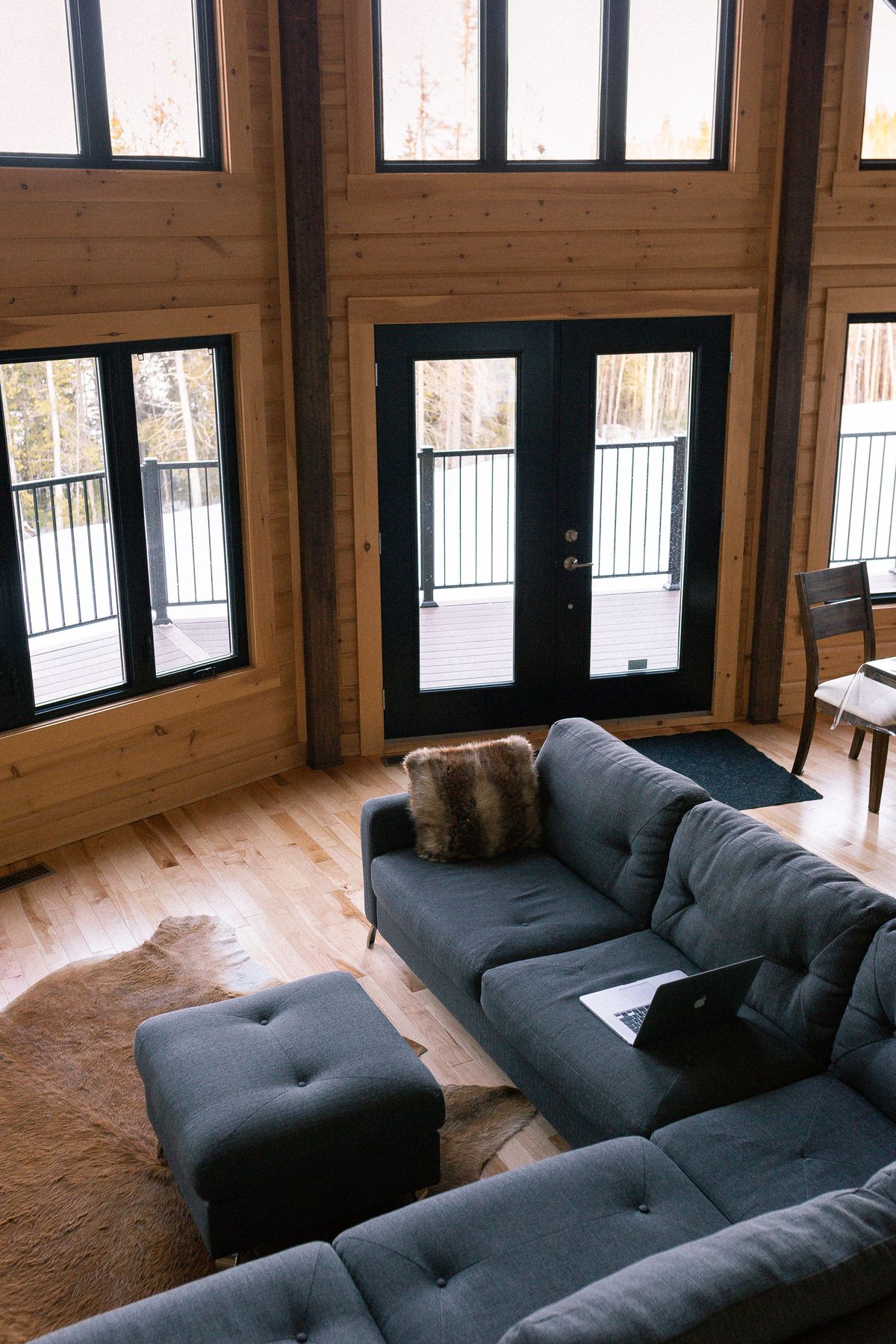
There is a critical caveat that even some designers miss: this calculation only works cleanly on south-facing walls (in the Northern Hemisphere). East- and west-facing windows receive low-angle sun in the morning and afternoon, respectively, when horizontal overhangs are far less effective. The sun's rays come in nearly sideways.
For those orientations, architects turn to vertical fins, recessed window openings, deciduous landscaping, or operable exterior shading — each one a design decision that requires understanding not just the sun's altitude but its azimuth (horizontal bearing) throughout the day.
A builder might install identical overhangs on every elevation because it looks consistent. An architect designs each facade as a distinct response to the sun's behavior on that specific wall. The visual result can be just as clean — often more striking — but the logic behind it is entirely different.
The Detail That Reveals the Designer
Next time you see a modern cabin with deep, cantilevered eaves and south-facing glass, ask yourself: did someone calculate that depth, or did they just pick a number that looked good?
The answer determines whether that building is working with the climate or fighting against it. And that fight — against heat gain, against heat loss, against rising energy costs — is one that occupants pay for every single month, for the entire life of the building.
The overhang is one of the oldest architectural elements in existence. The mathematics that make it perform are freely available. But the discipline to apply those calculations correctly, to integrate them with the building's orientation, floor plan, and material palette — that requires the kind of training that separates architecture from construction.
It is an 18-inch decision. But it is a decision that compounds.
Curious how passive solar principles are integrated into real cabin designs? Explore the PT Cabin — architect-designed plans where every detail, from overhang depth to window placement, is calculated for performance.
0 comments